
10 Years of Linguistpd: A Chat With Wendy – Part 1
22nd July 2025
As Linguistpd has just celebrated our tenth anniversary, I sat down for a chat with our founder and director, Wendy, to hear about her journey from those early days of Linguistpd to where she is now, ten years later.
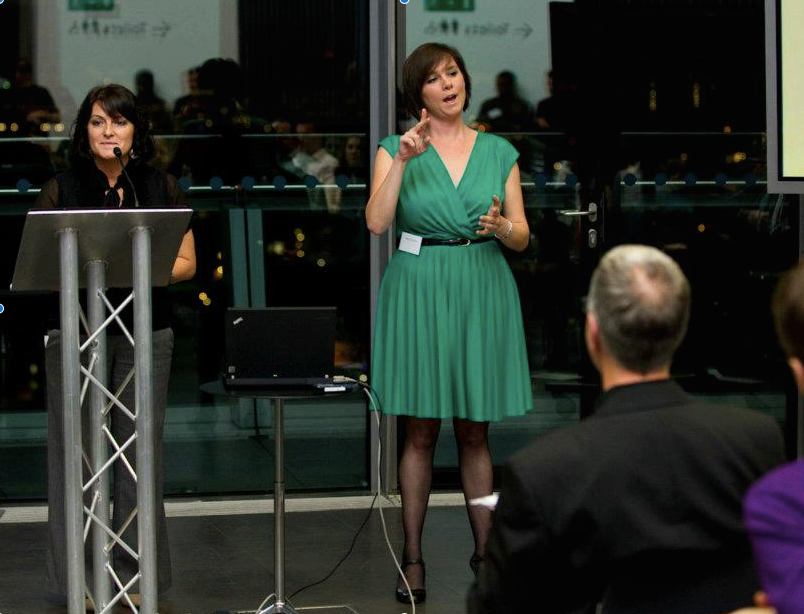
Wendy interpreting
Over the past decade, Wendy has built something special: a highly regarded online community for interpreters and professionals working with Deaf people. Along the way, she has had to overcome challenges, learn new skills, and keep up to date with the needs of the interpreting community.
The story began in 1999, when Wendy was working as a CSW in education. She qualified as a sign language interpreter in 2005. A few years later, she began training in face-to-face workplace and office interpreting, and soon started working with Dr Jules Dickinson.
When it comes to launching Linguistpd, Wendy was already providing face-to-face training, so going online felt like the natural next step. “We launched in 2015 – so ten years ago now! At that point, I’d been working with a great company called Terptree, and they offered the first series of audio webinars which I was involved in. But I always felt it was important for people to be able to see each other,” she explains. “That’s something I really appreciate about our webinars now – being able to see our learners, and for them to see us. It creates an interactive and engaging session, even though we’re not physically in the same room.”
The original Linguistpd logo!
Looking back, Wendy’s role has certainly changed and evolved since she started out. “I feel that I’ve picked up so much along the way. I’ve learned video editing, explored different webinar platforms – we didn’t always use Zoom. My role has definitely grown. It’s not just about organising training anymore – it’s also about developing all these new skills: marketing, understanding what our customers want, adapting to trends.”
She has kept the mindset that “you have to be willing to learn from scratch and not be afraid to try things out”, and that has clearly helped her to get to where she is today.
One of Wendy’s favourite things about Linguistpd is that moment towards the end of a webinar. “When you get great feedback and see that the training you’ve sourced and provided is genuinely useful for people – that’s really satisfying. Knowing it’s made a difference to someone’s practice, that’s what I find most rewarding.”
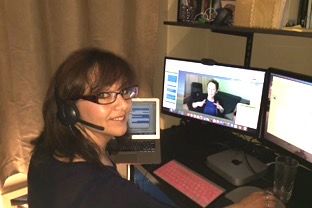
Wendy working on one of our early webinars
We’ve certainly shared many of those moments, when the chatbox floods with “thank you” messages and you feel this sense of relief and pride. As Wendy puts it, “the adrenaline settles, and you think, Yes – we did it!.”
Of course, it hasn’t been without bumps in the road. Wendy acknowledges that there have been “the occasional technical hiccup”, but nothing that couldn’t be handled. “You really have to be adaptable and resilient,” Wendy shares. “Having a support system in place helps, too. We talk a lot about the importance of supervision for interpreters, and that applies to this kind of work as well.”
Over the years, the CPD landscape has also shifted, especially during the pandemic. Wendy did have the advantage of having worked in VRS since 2006, so transitioning to online work was pretty seamless. However, this wasn’t the case for a lot of interpreters.
“There was a noticeable distinction,” Wendy recalls. “Some adapted quickly, others struggled to adjust and stuck to community work, which became difficult to get during the pandemic. So, we began offering training to help interpreters assess their home setup and get ready for remote interpreting. It was really rewarding to support that adaptation.”
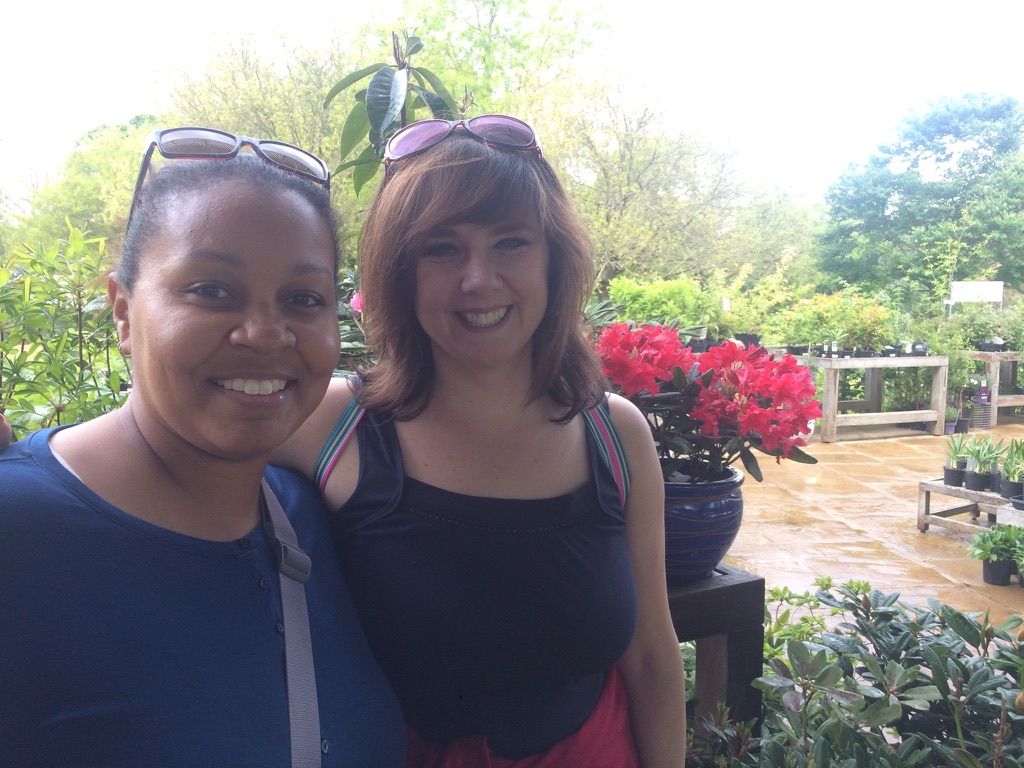
Wendy and Krystal – the original LPD team!
I was interested in Wendy’s perspective on accessibility for Deaf people, and what changes she’s seen over the years. She told me that the number of interpreters has increased massively – “when I started, there were fewer than 200 interpreters across the UK,” she said, but now it’s around 1,500 or more.
This is fantastic on the surface, but unfortunately, it’s not that simple. “Deaf people still report struggling to get interpreters,” Wendy explains.
“I see plenty of interpreters saying they’re available when jobs are posted – so clearly, they’re there. The issue often lies in the contracts. Some agencies win contracts but treat interpreters poorly, so many good professionals refuse to work with them. Unfortunately, this leaves Deaf people with less access, even though capable interpreters are available.”
We hope that this situation improves as awareness continues to grow and better contracts are awarded – ideally to Deaf-led agencies who genuinely serve the community.
→ Part 2 coming soon: Wendy on milestones, what’s next for Linguistpd, and a thank you to the community.